
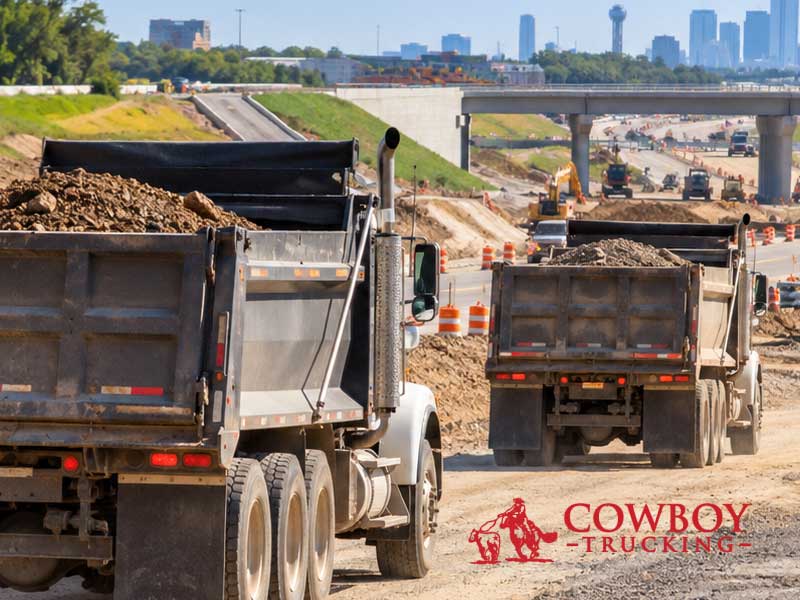
Doug won the contract for a road improvement project a few weeks ago. He’s worked with his hauling contractor for years, so he knows they’re trustworthy.
A month into the project, he needs extra hauling capacity. His hauler arranges two additional trucks to keep material moving.
Doug is about to put down the phone when a thought strikes him. Are those extra trucks covered under the hauler’s insurance policy? Or do they have their own coverage that meets his project’s requirements?
One more question before he hangs up. Better to check now than discover a problem later.
Why Construction Hauling Insurance Needs a Second Look
When you appoint a hauling contractor, checking their insurance is part of your normal due diligence. But what happens when the arrangements change?
Infrastructure projects rarely follow a perfectly predictable schedule. You might need additional trucks to handle increased excavation, accelerate material deliveries, or make up time after weather delays.
Your original insurance checks may have been perfectly adequate. However, bringing additional vehicles or independent owner-operators onto the project can introduce different insurance arrangements.
Commercial auto liability insurance generally covers claims arising from vehicle accidents, subject to the policy’s terms and exclusions. An independent owner-operator may carry their own policy rather than being insured under the hauling company’s coverage.
And insurance remains an expensive consideration for trucking businesses. According to the Council of Insurance Agents & Brokers, commercial auto premiums increased by an average of 4.5% in the second quarter of 2026, even as premiums across the wider commercial insurance market declined.
As we discussed in our earlier article on rising insurance costs for Texas trucking services, these pressures can influence the cost of hauling. But for GCs, the immediate concern is making sure the coverage is appropriate for the work being undertaken.
What Should GCs Check When Hauling Arrangements Change?
Start by asking your hauling contractor how the additional trucks will be provided. Are they part of the contractor’s own fleet, or will independent owner-operators undertake the work?
If other operators are involved, establish which company is responsible for providing the required insurance and documentation.
You’ll also want to confirm that the applicable liability limits meet your project’s contractual requirements. Some infrastructure contracts include additional insured provisions or other conditions that need specific attention.
A certificate of insurance can help you verify the coverage reported by an insurer or broker. But remember it doesn’t guarantee coverage for every situation. Where necessary, request confirmation of the relevant policy provisions or endorsements.
Timing is important, too.
Checking these details before additional trucks arrive is considerably easier than trying to resolve an insurance question when vehicles are already working on a busy construction site.
And remember that insurance requirements may come from several directions, including your own contract, the project owner, and other agreements governing the work.
The aim is to keep your hauling operation moving without introducing avoidable uncertainty.
At Cowboy Trucking, we understand how quickly infrastructure hauling requirements can change.
As a family firm of many years’ standing, we’re known for our excellent communication and reliable hauling services throughout the year.
We work closely with general contractors across Dallas-Fort Worth to coordinate the trucks and hauling capacity their projects need.
Let’s discuss your project’s hauling requirements.