
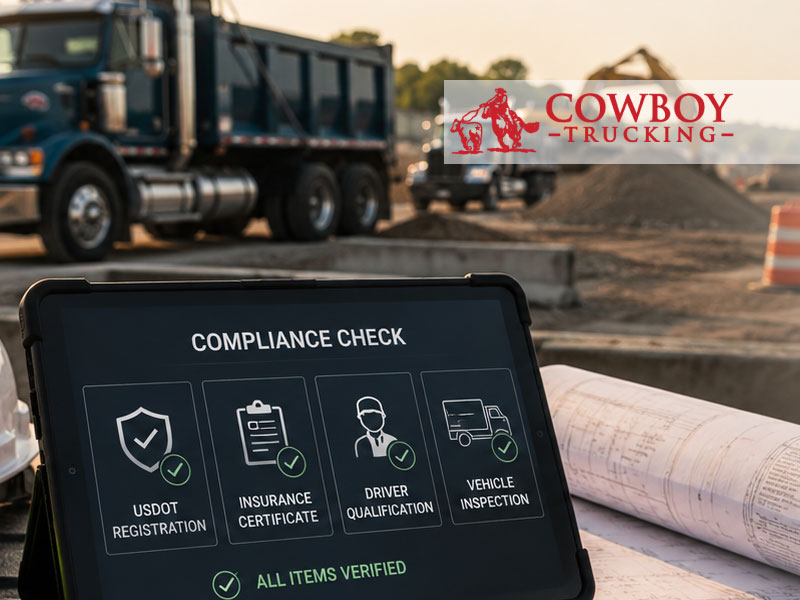
When you decide to hire a construction hauling company, you have more in mind than enough trucks to move your materials. On infrastructure projects, construction hauling compliance is part of your safety, documentation, and operational responsibilities.
A reliable hauler should be able to demonstrate that its people, vehicles, and documentation meet the standards expected on today’s infrastructure projects.
Here are four areas worth checking before work begins.
Construction Hauling Compliance Starts with Proper Licensing
Commercial hauling companies should be able to provide their USDOT registration and any operating authority required for the work they undertake.
Keeping this documentation current demonstrates that the business meets federal operating requirements and is committed to maintaining them.
It’s also worth confirming that the company has experience working on infrastructure projects similar to yours. For example, those where compliance expectations are often more demanding than general freight transport.
FMCSA provides the federal safety framework. Infrastructure hauling may also involve additional state, local, or project-specific requirements. This is because of oversized loads, overweight permits, or the nature of the work.
Is the Insurance Appropriate for Infrastructure Projects?
Different projects often specify minimum levels of commercial auto liability cover. You may also need to see current certificates of insurance before work begins.
If your contract includes additional insured requirements or other project-specific conditions, expect a professional hauling company to be able to provide the necessary documentation promptly rather than delaying mobilization.
Are Drivers Properly Qualified?
Qualified drivers are as important as reliable equipment. Depending on the vehicle, drivers should
- hold the appropriate Commercial Driver’s License (CDL),
- maintain current medical certification, and
- comply with federal drug and alcohol testing requirements.
Driver qualification requirements continue to evolve. For example, recent federal changes affecting Commercial Driver’s License (CDL) eligibility for military veterans. This makes it worthwhile to work with companies that stay current with regulatory developments.
How Well Are Vehicles Maintained?
Well-maintained trucks are less likely to experience breakdowns, inspection issues, or unnecessary downtime that can affect your project schedule.
Ask how vehicles are inspected, maintained, and repaired. A professional hauler should have documented maintenance procedures, regular vehicle inspections, and a process for identifying and correcting defects before equipment is dispatched.
Few project managers want to hear that a scheduled delivery has been delayed because a truck broke down on the way. No maintenance program can prevent every mechanical failure. But a disciplined inspection and servicing process greatly reduces the risk of avoidable breakdowns.
Compliance Protects Everyone on the Project
Good construction hauling compliance helps reduce risk for everyone involved in your infrastructure project.
When licensing, insurance, driver qualifications, and vehicle maintenance are properly managed, you can focus on keeping work moving safely and efficiently rather than resolving avoidable compliance issues.
In our next article, we’ll look at the on-site procedures that help keep infrastructure projects safe, organized, and moving efficiently every day.
Cowboy Trucking is well established and well trusted in the DFW area and beyond. We are happy to provide any evidence you require of compliance. Talk with us today.
Image © Cowboy Trucking