
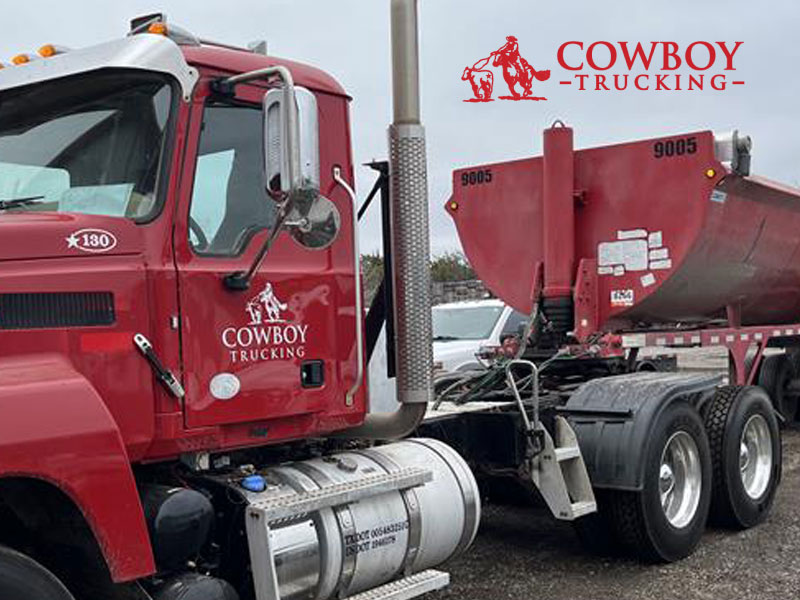
If you build infrastructure in Texas, you already know that your projects live or die on logistics. Especially where 314,600+ miles of road are either being built or used to haul the materials you need.
Recent moves around logistics and infrastructure in Texas are reshaping how you can plan that work and what you may need from your hauling partners. Here are a few of the latest.
FTZ in Dayton
One of the biggest developments in infrastructure in Texas is the activation of a 15-acre Foreign Trade Zone (FTZ) in Dayton, Texas, by Bennett Motor Express/BOSS Heavy Haul.
For you, that means oversize and heavy components coming through the Gulf Coast can be staged, stored, and processed with reduced duties and smoother customs handling.
If you work on industrial plants, ports, or energy facilities that rely on imported modules or equipment, you can use this FTZ as a strategic laydown and consolidation point before final delivery to your site.
That can shorten your critical path and reduce the risk of congestion at the port itself.
At the same time, large private logistics investments are creating new pockets of construction demand that will need hauling support…
H-E-B in North Texas
H-E-B is developing a major logistics and distribution hub on more than 600 acres along I‑35 near Valley View, Texas.
No construction timeline has been decided yet, but it’s one to keep an eye on for bidding.
For you as a general contractor, that can signal multi-year opportunities in site development, tilt-wall or warehouse construction, paving, and utilities – all of which depend on reliable movement of aggregates, structural steel, racking, and MEP components.
As this hub grows, you may also see new backhaul opportunities and shorter deadhead legs when you coordinate with hauling truckers that serve the same corridor.
SH-6: Expansion of Crucial Infrastructure in Texas
Public infrastructure work is also ramping up, particularly in highway and water projects. Fluor has broken ground on the State Highway 6 expansion in the Bryan/College Station area. This is a significant TxDOT job involving 12 miles of roadway widening and new structures.
If you pursue DOT work, this kind of project changes traffic patterns, permits, and allowable haul routes for your own loads in the region.
Coordinating early with your haulers on time-of-day restrictions, detours, and staging locations will help you avoid last‑minute surprises.
Water Facilities Infrastructure Serving Austin and Fort Worth
Water infrastructure is another area where you can expect sustained demand for heavy hauling.
Ferrovial’s Webber unit has been tapped to build two major water facilities serving Austin and Fort Worth, with a combined value around 720 million dollars.
Construction is underway. But these facilities will require continuous delivery of concrete, pipe, steel, and equipment over several years, creating opportunities if you self-perform or subcontract civil, structural, or mechanical scopes.
It also means more competition for specialized transport capacity. So, locking in relationships and capacity with hauling partners early in the project cycle will matter more.
As you plan your backlog in Texas, it’s worth treating logistics as a strategic lever, not just a cost line. You can, for example:
- Use new FTZ capacity near the Gulf Coast to simplify complex imports
- Watch emerging logistics hubs like H-E-B’s I-35 site for private‑sector work
- Track major highway and water projects that will affect your routes and carrier availability
If you align your bid strategy and project phasing with these trends, you’ll be better positioned to keep your jobs moving – and your schedules intact – in the current very active market for building infrastructure in Texas.
If you need experienced hauling help to complete your projects on time, give us a call.
Image © Cowboytruckingdfw.com